
The final, unpleasant truth about the automated corporate takeover of the music you love.
If you read the previous part of this series, you know how Danish music publisher Stellar Music manufactured a fake AI artist named Jacub. In a matter of weeks, this algorithmic ghost hijacked Sweden’s Spotify charts to the tune of 6.5 million streams.
It was a cold, calculated experiment designed to see how easily tech corporations can replace human creators, bypass royalty payouts, and aggressively pad the pockets of their tech-firm shareholders.
When confronted, Stellar Music predictably hid behind a legal smoke screen. They claimed “Jacub” wasn’t an automated script, but a legitimate collective of real human songwriters using AI as a modern tool. They argued that humans still directed the creative vision, tweaked the mix, and guided the software. They openly challenged the public, stating that whether the music was “real” or not simply depended on a listener’s personal definition of art.
Their corporate defense might have even sounded believable. That is, if it weren’t for the Norwegian Case.
The Assembly Line
Stellar Music didn’t limit this digital sandbox experiment to Sweden. Following the digital trail, investigative journalist Emanuel Karlsten discovered that the exact same Danish office had quietly launched a parallel AI prototype targeted directly at the Norwegian market at the exact same time.
Under the fake name Ingrid Eikeland, they dropped a song called “Søsken”—sung entirely in automated Norwegian.
Just like the Swedish test, the track was engineered to fly under the radar on TikTok first, tracking user behavior to see if organic listeners would mistake it for a human artist and demand it on Spotify. By bypassing their own Danish borders and deploying language-specific algorithmic prototypes into Sweden and Norway, Stellar Music used the distinct cultural tastes of unique nations against them.
You can try to argue that a group of human producers deeply crafted one Swedish song using digital tools. But when the exact same corporate office is simultaneously flooding multiple borders with different language folk-ballads under completely different fake personas, it proves they aren’t an artistic collective.
They are an assembly line.
The Ultimate Secret: Fractional Dilution
The real financial threat of AI music isn’t a single hit song making a few thousand dollars. It is a corporate scheme called fractional dilution.
Critics suspect Stellar Music wasn’t trying to make Jacub a standalone rockstar. They were testing a pipeline to see how easily a single tech firm could automate the creation of the music, the artwork, and the registration trail to generate thousands of unique “ghost personas” across dozens of genres simultaneously.
If you can automate the process, a single corporation can control 10% of a country’s total streaming traffic under 500 different fake names.
Remember, streaming platforms pay out royalties from one massive national pool based on total market share. If a tech company uses AI to flood thousands of automated playlists with thousands of fake songs, those tracks accumulate millions of micro-streams. Quietly, invisibly, they siphon massive chunks of money right out of the global pool.
This is industrialized theft. It directly steals the fraction-of-a-cent payouts that real, flesh-and-blood human musicians rely on to survive. The digital footprint left by Stellar Music wasn’t an amateur mistake—it was the supreme arrogance of a tech giant running a successful dry run for a total corporate takeover of the digital music ecosystem.
The Death of the Stage
You are reading this, shaking your head, and telling yourself: “Okay, maybe there is a fraction of truth here. But it will never truly work because we still have live music. They can never take away the stage from me.”
Really? Who is being naïve now?
The ABBA Voyage show in London is the ultimate proof of concept for the corporate machine. It proved that audiences will happily pay top dollar to watch digital “ABBA-tars” performing a simulated, perpetually young, flawless 1970s concert. The crowd cheers, cries, and experiences intense, raw emotion—even though the performers on stage are nothing but light, code, and pre-recorded data.
The tech companies didn’t just replicate a live show; they optimized it to run flawlessly, night after night, entirely stripped of the “burden” of aging, human fatigue, or erratic behavior.
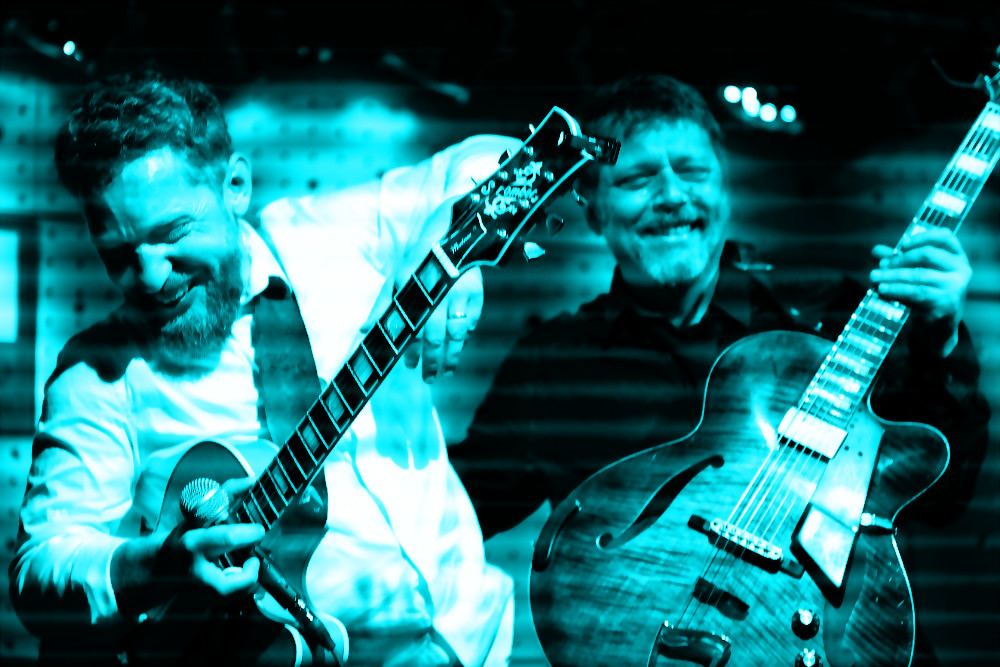
If a stadium full of adults can be profoundly moved by a digital projection of a pop band, it is incredibly foolish to think that a local jazz club or a basement jam session is safe. The corporations have seen the math: audiences will accept a ghost if the lights are bright enough.
No, buying a single physical record at a local gig won’t instantly fix the systemic, multi-million dollar corporate fraud I’ve been writing about for weeks. But it is your drop in the ocean. It is a direct vote for human sweat, human blood, and human survival.
The machine is clicking the button. What are you going to do?
The previous parts in this series can be found here: